
- HubSpot & CRM Strategy
- 4 mins
An honest comparison to help small businesses figure out which platform actually fits their situation.
Two Solid Platforms, Different Situations
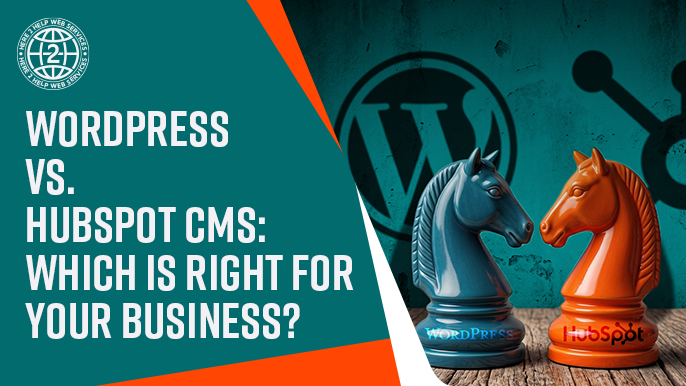
One of the questions we get asked most often is whether a business should build their website on WordPress or on HubSpot CMS. There is no universal right answer, and we say that as a company that works with both platforms regularly. Each one is genuinely good at what it does. The right choice depends on your budget, your team, how technical you want to get, and how your website needs to connect to the rest of your marketing.
Rather than pushing you toward one option, this post walks through the honest tradeoffs so you can figure out which platform fits where your business actually is right now.
Ease of Use
WordPress has a learning curve, especially once you move beyond basic page edits into plugins, themes, and site structure. It is powerful, but that power comes with more moving parts to understand. HubSpot CMS, on the other hand, is built with a more guided editing experience, which tends to feel more approachable for someone without a technical background making day to day updates.
If you have a team member who enjoys learning the technical side of a website, WordPress opens up a lot of flexibility. If you would rather your team spend their time on content instead of troubleshooting plugins, HubSpot CMS often feels more comfortable day to day.
Cost Considerations
WordPress itself is free, but that number is a bit misleading. Once you factor in hosting, a quality theme, plugins for the functionality you need, and ongoing maintenance, the real cost adds up. It can still come out lower than HubSpot CMS depending on how much you invest in the surrounding pieces, but it is rarely truly free once a site is fully built out.
HubSpot CMS bundles hosting, security, and a lot of built in functionality into one price, which can simplify budgeting even though the upfront number is higher. Whether that tradeoff makes sense depends on how much value you place on fewer separate bills and less coordination between vendors.
Flexibility and Customization
This is where WordPress tends to have the edge. With thousands of themes and plugins available, WordPress can be shaped into almost anything, from a simple brochure site to a complex online store. That flexibility is a real strength for businesses with specific or unusual needs.
HubSpot CMS is more structured. It covers the needs of most small businesses very well, but it is not designed to be infinitely customizable the way WordPress is. For a business with a clear, standard set of needs, that structure is often a feature rather than a limitation, since it means less to manage and fewer decisions to make.
Hosting and Maintenance
This is one of the most important differences to understand. A WordPress site is powerful, but it requires ongoing attention. Plugins need updates, themes need compatibility checks, and security needs active monitoring. Skipping this maintenance is one of the most common ways a WordPress site becomes vulnerable or starts to break in small, frustrating ways.
HubSpot CMS handles more of this behind the scenes. Hosting, security, and platform updates are built into the product, which takes a significant ongoing task off your plate. For a business that does not want to think about website maintenance as a recurring responsibility, this is often the deciding factor.
SEO Capabilities
Both platforms are capable of strong SEO performance, and neither one gives you an automatic advantage. WordPress has a mature ecosystem of SEO plugins that offer deep, granular control, which appeals to teams who want to fine tune every technical detail. HubSpot CMS has SEO tools built directly into the content editor, along with recommendations that guide less experienced users toward better practices without needing a separate plugin.
In practice, SEO success on either platform comes down more to the quality and consistency of your content strategy than to the platform itself.
Integration with Marketing Tools
This is where the decision often becomes clearer for businesses already using HubSpot as their CRM. Since HubSpot CMS lives inside the same platform as your contacts, forms, and workflows, everything connects natively without needing a separate integration. If you are on WordPress and using HubSpot as your CRM, that connection is still very workable, just with an extra integration layer in between.
If your marketing already runs through HubSpot, the case for HubSpot CMS gets noticeably stronger simply because of how much friction it removes.
Team Skill and Support Considerations
One factor that gets overlooked in a lot of these comparisons is who will actually be managing the site day to day. If you have someone on your team who already knows WordPress, or you work with a developer comfortable in that ecosystem, that existing skill set can make WordPress the more practical choice regardless of what a feature comparison chart might suggest. Comfort and familiarity are real assets, not minor details.
On the other hand, if nobody on your team has a technical background and you do not want to rely on outside help for every small update, HubSpot CMS often reduces the number of moving parts that require specialized knowledge to manage. Thinking honestly about who will be doing the day to day work is just as important as comparing the platforms feature by feature.
Making the Choice That Fits Your Business
There is no single right answer here, and that is genuinely true, not a diplomatic dodge. A business with unique functionality needs and a team comfortable managing a website often does well on WordPress. A business that wants simplicity, tighter marketing integration, and fewer moving parts to maintain often does better on HubSpot CMS. Getting this decision right matters, because migrating a website later takes real time and money, so it is worth thinking through carefully upfront rather than choosing quickly and revisiting it in a year. At Here 2 Help Services, we work with both platforms, and we would rather help you land on the one that actually fits than push you toward either one.